


When enjoying the outdoors on the North Shore, it's crucial to understand ticks, their habitats, feeding habits, and how to handle tick bites. While infection rates overall are considered relatively low1, the threat of infection is serious, and of those infected, kids aged 5-14 have a higher rate of infection compared to adults 65 and younger. Preventative measures and swift actions are essential to protect yourself, your pets, and your family from serious infections.While in Removing an embedded tick properly is a critical part of avoiding tick-borne disease.
Removing a Tick
If you find a tick crawling on your body simply remove the tick and destroy it. A shot glass of Listerine will do the trick - just drop it in. If a tick has burrowed in to your skin, you should remove it immediately with tweezers:
- Use fine tipped tweezers
- Grasp the tick as close to the surface of the skin as possible
- Pull upward with steady pressure until the tick releases.
- Twisting and erratic movement will cause the head or mouth parts of the tick to break off and become embedded in your skin.
- Embedded tick parts should be removed with tweezers and the wound should be cleaned with Hydrogen Peroxide
- Twisting and erratic movement will cause the head or mouth parts of the tick to break off and become embedded in your skin.
- Clean the bite area, your hands and your tweezers with alcohol, or plenty of soap and hot water.
- Follow Up and Be Vigilant!
- Make a note in your calendar of your tick bite, and where you may have picked up the tick.
- If you develop symptoms for Lyme Disease or Babesiosis seek treatment immediately from a qualified health care provider.
DO NOT follow folk remedies for tick removal like using petroleum jelly or nail polish to smother the tick, or using a cigarette or lit match to burn the tick off. You want to remove the whole, live tick as soon as possible.
More About Ticks
Ticks live in the woods and in grassy fields, but they can also survive in and around your home. They are capable of surviving in varied environments as long as their main source of food - blood - is available. In the world of disease control, ticks are known as 'vectors' - an entity that transmits disease from one host to the next through their behavior. Ticks, like mosquitos, transmit disease through feeding.
Lyme Disease | Signs, Symptoms & Treatment
The most dangerous disease transmitted by ticks on the North Shore is Lyme Disease - a bacterial infection. Infected deer ticks bite humans and transmit the disease while feeding. Symptoms appear in the form of fatigue, fever, headache, muscle & joint aches, swollen lymph nodes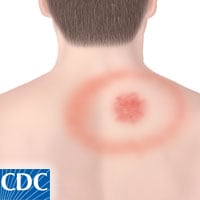 and a bulls-eye shaped rash called erythema migrans. Lyme disease is a serious condition that can cause permanent bodily harm if left untreated. Infection can spread to joints, the nervous system and the heart.
Infection can only be verified by a blood test. While clinical diagnosis is useful, the only way to be 100% sure that you've been infected is through a blood test. If caught early, a treatment of antibiotics usually results in complete recovery. Drugs commonly used to treat Lyme Disease include doxycycline, amoxicillin, or cefuroxime axetil. People with certain neurological or cardiac illness may require more intense intravenous treatment with drugs such as ceftriaxone or penicillin.
Babesiosis
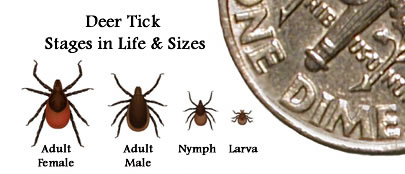
Babesiosis is a parasitic infection attacking red blood cells, primarily transmitted by nymph-stage ticks, which are as small as poppy seeds and hard to see. Severity ranges from asymptomatic to life-threatening, with flu-like symptoms such as chills, fever, headache, and fatigue. It can cause hemolytic anemia2, leading to jaundice3 and dark urine, and may result in low blood pressure, low platelet count, organ failure, or death.
Diagnosis involves blood tests to detect the parasite. Asymptomatic individuals often don't require treatment, while symptomatic cases respond to drug combinations like atovaquone & azithromycin or clindamycin & quinine. Severe cases may need additional treatments, including blood transfusions, mechanical ventilation, and dialysis.
Prevention
Like Poison Ivy, the best prevention of tick-borne disease is avoiding contact. This can be hard especially in the summer when we all spend more time out doors - at the beach, in the woods, out in the yard or at the park. There are strategies that can reduce your chances of exposure while you still enjoy the outdoors:
- Walk in the center of trails
- Wear shirts with long sleeves and pants when in the woods.
- Use a bug spray with DEET on exposed skin.
- Use a bug spray with permethrin on clothing, shoes and out door equipment.
- Inspect yourself, your kids, your pets and your gear.
- Try to do this on site before entering your vehicle.
- A tick can live in a car if it has people to feed on.
- Shower ASAP - within two hours is best practice.
- Conduct a full-body tick check using mirrors to view all parts after being in a tick infested habitat.
- Checking children should be thorough:
- most importantly hair
- under arms
- in and around ears and nostrils
- inside the belly button
- behind knees
- between legs
- around waistband
- Examine gear and pets
- Ticks can hitch a ride into your house on your dog, in your tent or on your backback and bite somebody when they're home!
- Clothes should be laundered and dried in a drier to kill any remaining ticks.
- A hot drier does more to kill ticks than a washing machine. Ticks can live through a wash cycle, but not a dryer cycle.
- Try to do this on site before entering your vehicle.
I frequently take my dog into the woods, and I consistently brush him with a styling brush that has stiff bristles at the end of our walk before getting in the car. This seems to be very effective in keeping the ticks from hitching a ride home. Other effective techniques are using rubber-palmed cloth gloves to rub down his entire body, or even a beach towel for a vigorous rub down.
1 From January to May 2024, Essex County showed a rate of infection of 2.5 or less per 10,000 population. For the entirety of 2023, Essex County showed a rate of infection of greater than 2.3 up to 7.5 per 10,000 population.
2 Hemolytic anemia is a condition where red blood cells are destroyed faster than they can be produced. This can lead to symptoms such as fatigue, shortness of breath, and pale or yellow skin (jaundice). The destruction of red blood cells causes a shortage of oxygen in the body, leading to organ dysfunction and other complications. Causes of hemolytic anemia include autoimmune disorders, infections, certain medications, and inherited conditions. Treatment depends on the underlying cause and may involve medications, blood transfusions, or procedures to remove the spleen.
3 Jaundice is a condition characterized by the yellowing of the skin and the whites of the eyes. It occurs when there is an excess of bilirubin, a yellow pigment produced during the normal breakdown of red blood cells. Normally, the liver processes bilirubin and excretes it in bile. However, when there's a problem with this process—due to liver disease, hemolytic anemia, or bile duct obstruction—bilirubin builds up in the body, leading to jaundice. Symptoms may also include dark urine and pale stools. If you experience symptoms of jaundice, seek medical attention immediately. Jaundice indicates that your liver may not be functioning properly, which can be a sign of a serious health issue that requires prompt diagnosis and treatment. Early intervention can prevent potential complications and ensure appropriate care.
Disclaimer: We are not medical professionals. The information in this article is the result of research from the National Institutes of Health, the CDC, the WHO, and the Mass Burea of Infectious Disease and Laboratory Sciences | Department of Public Health. When in doubt consult a qualified health care provider. Tick-borne diseases are serious medical conditions that are fatal under some circumstances if left untreated. If you develop symptoms described above, seek professional medical help.
Link(s):



